

If you're kitting out a warehouse for the first time, "racking" is one of the first words you'll hear, and one of the biggest decisions you'll make.
Get it right and you'll fit more stock in less space, move goods faster and keep your team safe. Get it wrong and you'll be paying to redo it within a year or two.
Confused about all things warehouse racking? You're in exactly the right place as here at Logical Storage Solutions, we specialise in a variety of racking types which we install right across the UK.
This guide breaks down what warehouse racking actually is, the main systems available and how to work out which one fits your business, without the jargon.
What Is Warehouse Racking?
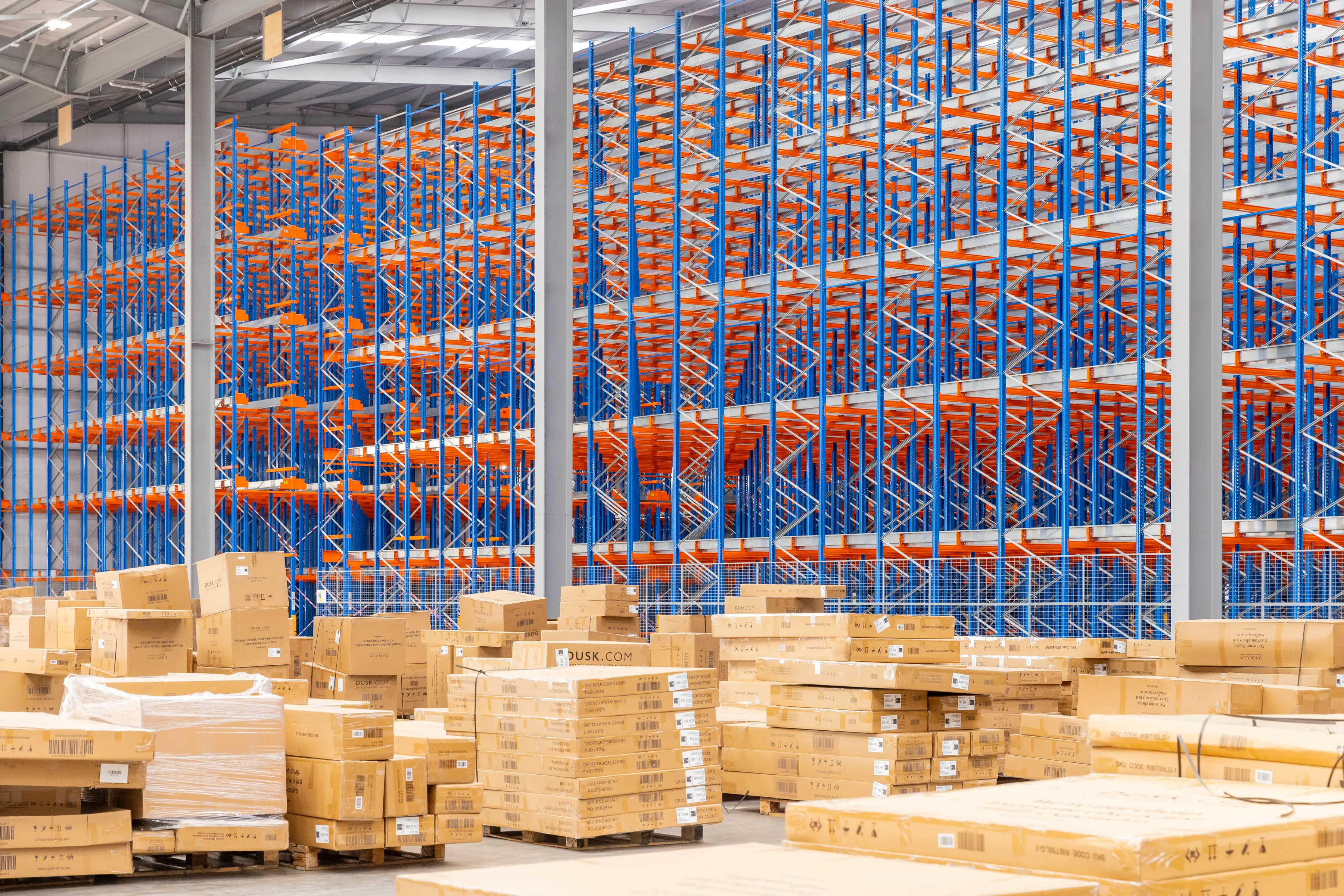
Warehouse racking is a structural storage system, usually built from steel, that lets you store goods (typically on pallets) vertically rather than spreading them across the floor.
Instead of stacking boxes and pallets directly on top of each other, racking creates defined, accessible levels so stock can be organised, located and retrieved safely using a forklift or pallet truck.
For a growing business, racking is what turns an empty warehouse shell into usable, efficient storage space. It affects how much stock you can hold, how quickly your team can pick and despatch orders, and how safely your warehouse operates day to day.
Why Racking Matters More Than People Expect
New warehouse owners often treat racking as an afterthought, something to sort out once the building is secured.
In practice, it's one of the decisions with the biggest long-term impact on the business:
- Space utilisation: The right racking can dramatically increase usable storage capacity within the same footprint, often delaying or removing the need to move to bigger premises.
- Operational speed: Well planned racking layouts reduce travel time for staff and forklifts, which speeds up picking, replenishment and despatch.
- Stock control: Defined locations make it far easier to track inventory accurately and reduce damage from ad hoc stacking.
- Safety and compliance: Poorly specified or damaged racking is a genuine safety hazard. UK businesses have a legal duty of care to inspect and maintain racking correctly.
- Scalability: Racking chosen with growth in mind can be extended or reconfigured, rather than replaced, as the business changes.
The Main Types of Warehouse Racking
There's no single "best" racking system. The right choice depends on your stock, your building and how you operate. For more help on this, our team can visit your site if you contact us for a quote.
In the meantime, here are the main systems you're likely to come across:
Wide Aisle Pallet Racking
The most common and cost-effective racking system, giving direct access to every pallet with a standard counterbalance forklift. A good starting point for most warehouses, particularly where budget and flexibility matter more than maximising density.
Learn more about our wide aisle pallet racking
Very Narrow Aisle (VNA) Racking
Uses narrower aisles and specialist VNA trucks to significantly increase storage density within the same floor space. Ideal for businesses that need to maximise capacity and have the budget for specialist handling equipment.
Learn more about our VNA racking
Mobile Racking
Racking mounted on mobile bases that move along floor-set rails, eliminating the need for multiple fixed aisles. Delivers very high storage density, well suited to businesses with limited floor space and lower-frequency stock access.
Learn more about our mobile racking
Shuttle Racking
A semi-automated, high-density system that uses a remote-controlled shuttle to move pallets within the racking structure. Suited to businesses handling large volumes of the same SKU, such as food, drink and FMCG operations.
Learn more about our shuttle racking
Cold Storage Racking
Racking specified and finished for use in chilled or frozen environments, accounting for temperature, condensation and the specific handling equipment used in cold stores.
Learn more about our cold storage racking
How to Choose the Right Racking for Your Warehouse
Before speaking to a supplier, it helps to have answers to the following:
- What are you storing? Pallet dimensions, weight and product type (including anything requiring temperature control) all shape the right system.
- What's your building's ceiling height? Taller buildings often justify taller racking and narrower aisles to make the most of available volume.
- How often do you need to access each pallet? Fast-moving stock needs easy access; slower-moving stock can go into denser, less accessible storage.
- What handling equipment do you have, or plan to buy? Aisle width is directly tied to the forklift or truck you use.
- Where is the business heading? Racking chosen with growth in mind will save a costly reconfiguration further down the line.
A site survey with a racking specialist is the fastest way to turn these answers into a workable layout. Our warehouse refurbishment service covers exactly this, from initial design through to installation.
If you're supplying or operating from a builders' merchant or distribution centre specifically, it's also worth looking at racking designed for builders' merchants, which has its own set of practical requirements around bulky and mixed-load stock.
Safety and Ongoing Compliance
Racking isn't a one-off purchase and forget. UK businesses have a legal duty to keep racking safe once it's installed, which means:
- Regular visual checks by warehouse staff
- A formal racking inspection at least once a year, carried out by a competent person
- Prompt repair of any damaged racking, which significantly weakens the structure even when it looks minor
Find out more about our racking inspection service and our racking repair service if you already have racking in place that needs assessing.
Frequently Asked Questions
Still need help understanding what warehouse racking is and how it works? We hope you'll find the following queries useful.
For anything else or to get a free quote, please get in touch with our team.
What Is Warehouse Racking Used For?
Warehouse racking is used to store palletised or boxed goods vertically, making better use of available floor space while keeping stock organised, accessible and safe to retrieve with a forklift or pallet truck.
What Type Of Racking Is Best For A Small Warehouse?
Wide aisle pallet racking is usually the best starting point for smaller warehouses, as it's cost-effective and works with standard forklifts. If floor space is very limited, mobile racking can significantly increase capacity within the same footprint.
How Much Does Warehouse Racking Cost?
Cost depends on the system, the size of the installation and site-specific factors like floor loading and building height. The most reliable way to get an accurate figure is a site survey, as generic per-bay pricing rarely reflects the real cost of a full installation.
How Often Should Warehouse Racking Be Inspected?
UK guidance recommends a formal racking inspection at least once a year, carried out by a trained inspector, in addition to regular visual checks by warehouse staff.
Can Warehouse Racking Be Reconfigured Or Extended Later?
Most bolted racking systems can be extended, reconfigured or relocated as a business grows, which is why it's worth discussing future plans with your racking supplier at the design stage rather than after installation.
Ready to Plan Your Warehouse Racking?
Whether you're fitting out a warehouse for the first time or reviewing an existing layout, getting the right racking system in place from the start will save time, space and money down the line.
Speak to the Logical Storage Solutions team for expert advice on the right racking system for your business.
Call us on 0845 689 1300 or get a free quote today.