

Pallet racking is one of the most reliable and widely used storage solutions in UK warehousing. However, the safety of pallet racking relies on the design, installation and ongoing management behind it.
When something goes wrong with a racking system, the consequences can be severe. A single collapsed bay can trigger a progressive failure across an entire run, putting stock, equipment and people at risk in a matter of seconds.
The reality is that the majority of serious racking incidents are not the result of bad luck. They are the result of avoidable mistakes, most of which originate at the design and installation stage and compound over time through inadequate inspection and maintenance.
At Logical Storage Solutions, safety is always our primary concern, whether we’re installing pallet racking or inspecting or repairing it.
From our experience working across the UK, these are the most common racking design mistakes we encounter, along with our advice on how each scenario can be addressed before it becomes a problem.
Underestimating Floor Loading Capacity
The starting point for any racking design is the floor. A racking system transfers significant concentrated loads through its base plates into the floor slab, and if the slab cannot handle those loads, the entire system is compromised regardless of how well the racking itself is specified.
Floor loading capacity is frequently overlooked during the design stage, particularly in older buildings where slab specifications may not be documented or where the original use of the building was very different from its current purpose. The correct approach is to commission a floor loading assessment before any racking design is finalised, not after. Installing a racking system and then discovering the floor cannot support it is an expensive and disruptive problem to unpick.
This is especially relevant for high-bay installations, multi-level racking and any system where forklift trucks will be operating at height, all of which place substantially higher demands on the floor slab than standard single-deep selective racking at low heights.
Specifying The Wrong System For The Application
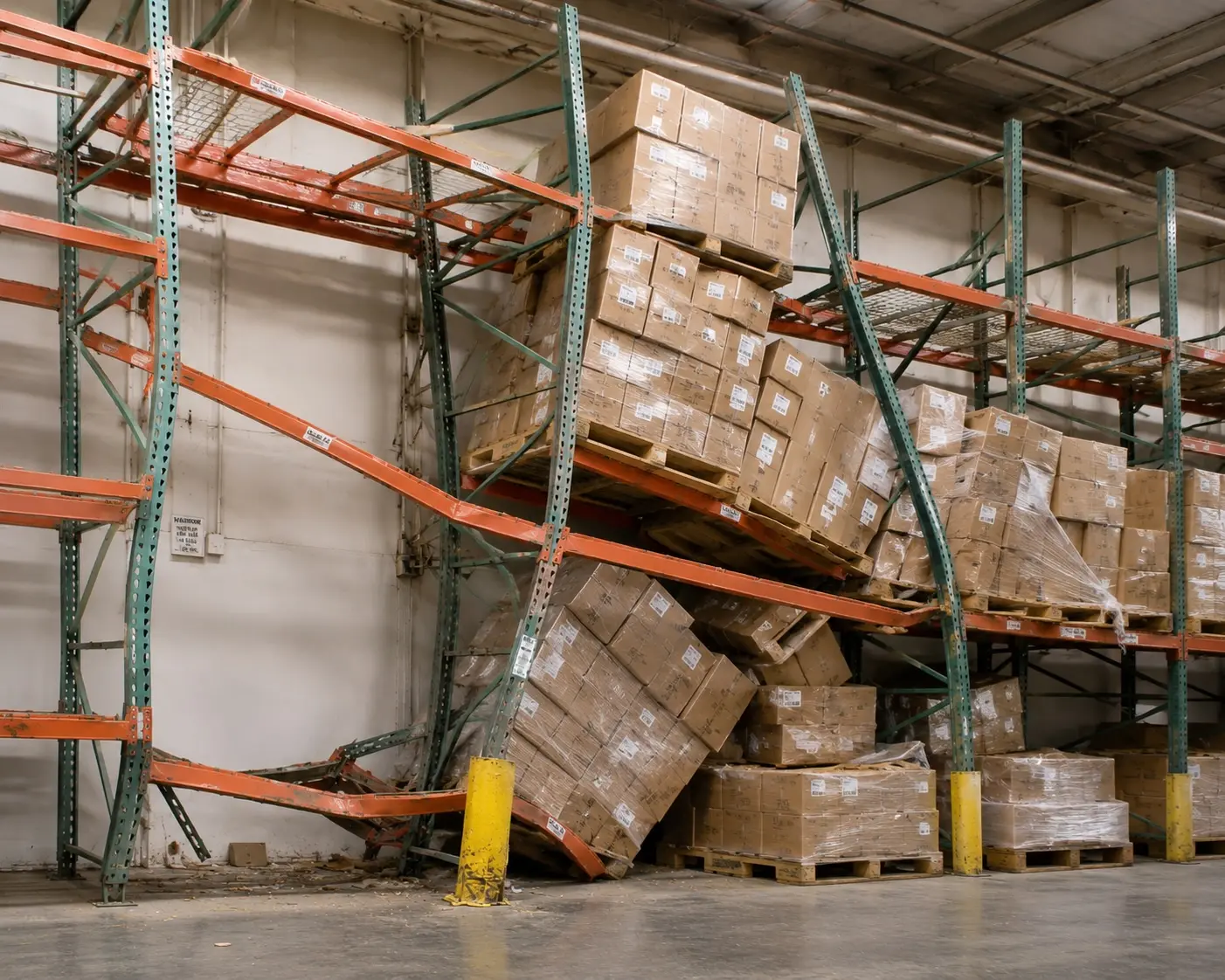
Not all racking systems are suited to all applications, and installing the wrong type of system for the operational requirement is a design mistake that creates both safety and efficiency problems.
A common example is specifying selective pallet racking in an environment where the product profile, throughput or handling equipment actually calls for a different system.
Drive-in racking, push back racking or wide aisle racking each carries different structural characteristics and load ratings, and substituting one for another without proper design review creates a situation where the system is routinely used outside its intended parameters.
The same applies to beam height configurations. Beam levels set at the wrong height for the products being stored lead to operators forcing pallets into positions they were not designed for, damaging beams and connectors and progressively weakening the structure. A properly designed system matches beam spacing to actual pallet dimensions and load weights, with a margin built in for operational variation.
Ignoring Aisle Width Requirements
Aisle width is a critical safety parameter in warehouse racking design and one that is frequently compromised when operators try to maximise storage density. Every racking system has a minimum aisle width requirement determined by the handling equipment that will operate within it, and operating below that minimum creates a collision risk that directly damages the racking.
Upright damage from forklift impact is the single most common cause of racking deterioration in UK warehouses.
A bent or deformed upright does not simply look unsightly. Under SEMA guidance and BS EN 15512, even moderate deformation can reduce a frame's load-bearing capacity by 40% or more.
An upright that looks structurally sound to the untrained eye may already be operating well beyond its safe load limit.
Designing aisle widths correctly for the handling equipment in use and ensuring those widths are maintained through floor markings and physical protection such as column guards and end-of-aisle barriers is one of the most effective things a warehouse operator can do to prevent progressive racking damage.
Missing Or Incorrect Load Notices
Every pallet racking system must display a load notice specifying the maximum permissible load per bay and the maximum unit load per beam level. This is a legal requirement under the Provision and Use of Work Equipment Regulations 1998 (PUWER) and is reinforced by HSE guidance and SEMA codes of practice.
Missing load notices are surprisingly common, particularly in older installations or following a layout reconfiguration where the original notices are no longer relevant to the current beam configuration. Operating without visible load notices means warehouse staff have no reference point for safe loading, and it also constitutes a compliance failure that would be noted in any HSE inspection or insurance audit.
Where a racking layout has been modified, the load notice must be updated to reflect the new configuration. It cannot simply be carried over from the previous design.
Failing To Account For Seismic And Dynamic Loads
Static load ratings describe the weight a racking system can hold when everything is still. In a working warehouse, loads are rarely static. Forklift trucks exert dynamic forces on racking when placing and retrieving pallets, and where racking is installed in areas subject to vibration from heavy plant or vehicle movements, these dynamic loads can accumulate into structural fatigue over time.
A robust racking design accounts for these dynamic factors rather than designing purely to static load ratings. This is particularly important for tall, narrow racking structures and for any installation in a building with a suspended or structurally flexible floor.
No Ongoing Inspection Programme
Even a perfectly designed and correctly installed racking system will deteriorate over time in a working warehouse. Forklift impacts, overloading, missing safety clips and gradual corrosion all take their toll, and without a structured inspection programme, the damage accumulates until it reaches a point of failure.
HSE guidance is clear that racking should be inspected by a competent person at least once every twelve months, with internal user inspections carried out more frequently. In practice, the annual inspection should be treated as a minimum rather than a target. High-throughput warehouses with significant forklift traffic may warrant quarterly or even monthly inspections depending on the level of activity and the condition of the racking.
The SEMA damage classification system provides a consistent framework for assessing the condition of racking. Green classifications indicate damage within acceptable limits. Amber means the affected section should be offloaded and repaired within four weeks. Red means the racking must be taken out of service immediately.
Having a professional racking inspection carried out by a trained assessor gives you a clear, documented picture of where your system stands and what action is required.
Damage Left Unaddressed
One of the most consistent patterns in serious racking incidents is a period of known or visible damage that was not acted upon.
Examples include an upright showing a dent or bow, a beam with a missing safety clip or a base plate that has shifted from its anchor point. These are not minor cosmetic issues. They are structural warnings that the system's load capacity has been compromised.
The reluctance to act is usually a combination of cost, operational disruption and the assumption that the damage is less serious than it looks. In most cases, the cost of a timely repair is a fraction of the cost of a collapse, and the disruption of a controlled repair is significantly less than the disruption of an incident.
Logical Storage Solutions carries out pallet racking repairs across all racking types, working around live operations wherever possible to minimise downtime.
No Nominated Person Responsible For Racking Safety
SEMA guidance recommends that every warehouse appoint a Person Responsible for Racking Safety (PRRS).
The PRRS is responsible for coordinating internal inspections, reporting damage, maintaining records and liaising with external inspection providers. Without a nominated PRRS, racking safety becomes nobody's specific responsibility and damage goes unreported.
This is a management and design failure rather than a structural one, but it has structural consequences. Racking that nobody is formally responsible for monitoring does not get inspected, damage does not get escalated and problems compound.
Appointing a PRRS and giving them access to a structured inspection framework is one of the simplest and most effective steps any warehouse operator can take.
Is Your Racking Safe? Find Out Before It Becomes a Problem.
If you have racking in your warehouse or storage facility and you have any concerns about its condition, now is the time to take action.
Logical Storage Solutions can help. Our team offers expert pallet racking inspections and racking repair services across the UK.
Get in touch today to book your inspection. Or, call us on 0845 689 1300 to speak to a specialist about your racking design requirements.